Watering, Mowing & Fertilizing: A No-Nonsense Seasonal Lawn Calendar
Most lawn advice is overcomplicated. Here's the simple seasonal rhythm — when to water, how high to mow, and when to feed — that keeps grass green without the guesswork.
A great lawn isn't about expensive products or a secret formula. It's about doing a few simple things at the right time — and not doing the things that quietly wreck it. Most homeowners overwater, mow too short, and fertilize on the wrong schedule, then wonder why their grass looks tired.
Here's the no-nonsense version: a seasonal rhythm anyone can follow, plus the one fact that determines almost everything.
First, the one fact that changes everything: your grass type
Before any calendar makes sense, you need to know which team your lawn plays for:
- Cool-season grasses (like fescue, ryegrass, Kentucky bluegrass) thrive in spring and fall and struggle in peak summer heat. Common in northern regions.
- Warm-season grasses (like Bermuda, Zoysia, St. Augustine) love summer heat and go dormant — turning brown — in cool weather. Common in southern regions.
Why it matters: the same action helps one and hurts the other depending on the season. Fertilizing a warm-season lawn in fall, for example, can do real damage, while fall is prime feeding time for cool-season grass. If you only learn one thing about your lawn, learn its type — your local extension office or any good local pro can tell you in seconds.
Not sure which you have?
A quick test: if your lawn stays green through the coldest months, it's likely cool-season. If it browns out in winter and greens up when summer arrives, it's warm-season. When in doubt, ask a local pro — regional knowledge beats any generic chart.
Watering: deep and infrequent beats little and often
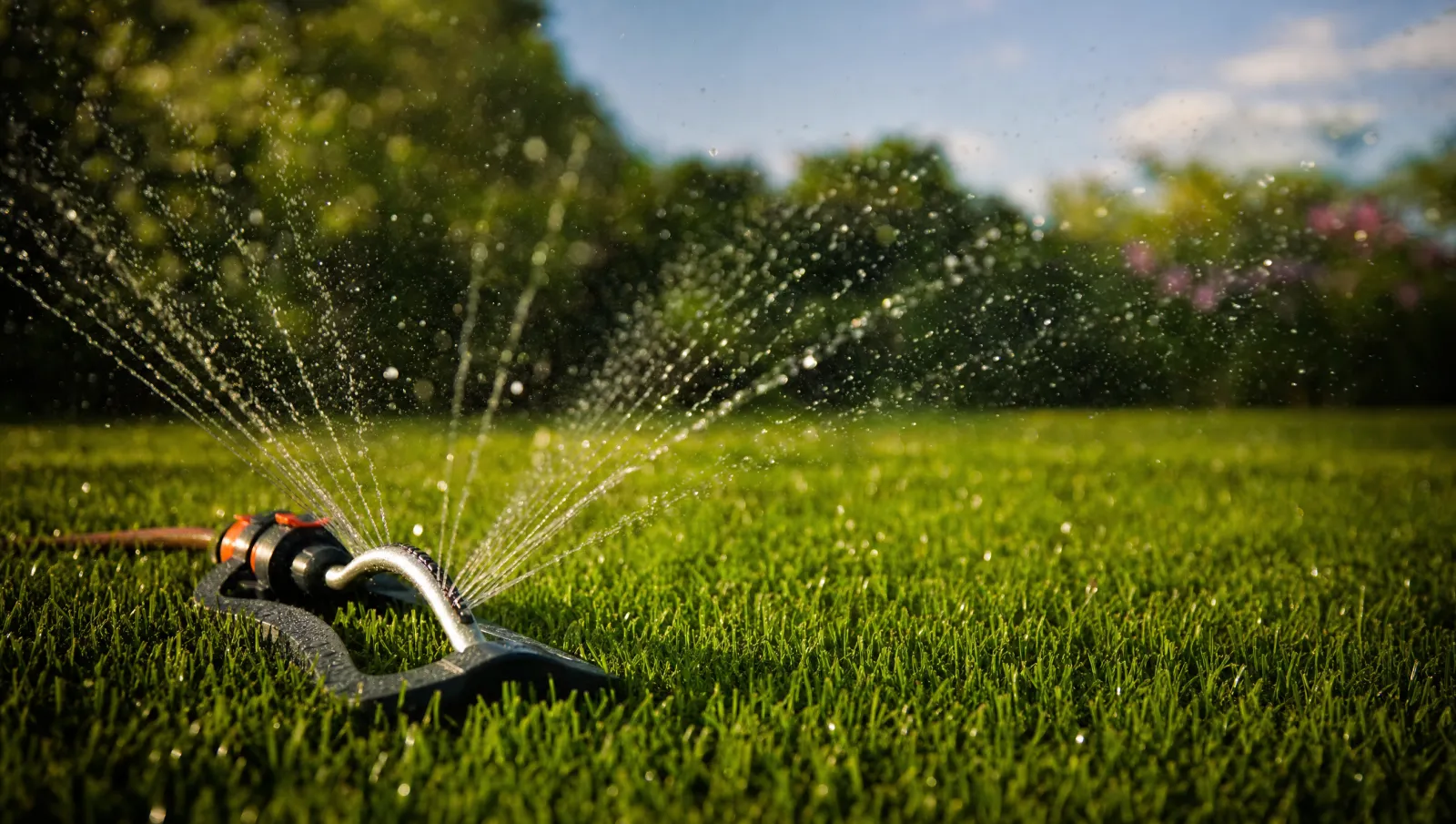
The most common watering mistake is a light sprinkle every day. That keeps moisture at the surface, which trains roots to stay shallow — and a shallow-rooted lawn is the first to brown the moment it gets hot or you miss a day.
The better rhythm:
- Water deeply, a couple of times a week, rather than a little every day. You want moisture to reach down into the soil so roots grow down to find it.
- Water early in the morning. Midday loses water to evaporation; evening leaves grass damp overnight, which invites disease.
- Let rain do the work. Skip your watering when nature already handled it.
Deep, infrequent, early. That's the whole rule.
Mowing: the one-third rule and a sharp blade
Two habits separate a healthy lawn from a stressed one:
- Never remove more than one-third of the blade height in a single mow. Scalping the lawn shocks it, exposes soil to weeds, and stresses the roots. If it got long, bring it down over two mows, not one.
- Keep your mower blade sharp. A dull blade tears the grass instead of cutting it, leaving ragged, browning tips and an open door for disease. A clean cut heals faster and looks better.
A good general habit is to mow on the higher side — taller grass shades the soil, holds moisture, and crowds out weeds. (Exact heights vary by grass type, so check what's ideal for yours.)
Fertilizing: right season, right grass, light hand
Fertilizer is where good intentions backfire most. More is not better, and timing is everything:
- Cool-season lawns are generally fed in spring and fall, when they're actively growing. Fall feeding in particular helps them store energy for a strong spring.
- Warm-season lawns are generally fed in late spring through summer, during their active growth, and not as they head into dormancy.
Feeding at the wrong time — or piling on too much — can burn the lawn, fuel disease, or push weak growth. A lighter hand at the right season beats a heavy hand at the wrong one every time.
When in doubt, go local
Lawn care is deeply regional. The best calendar for your yard depends on your climate, soil, and grass type — which is exactly the kind of thing a knowledgeable local pro nails without thinking about it.
The simple seasonal rhythm
- Spring: Clean up debris, start mowing as growth resumes (one-third rule), and feed cool-season lawns. Watch for weeds waking up.
- Summer: Water deep and early, mow on the higher side, and let warm-season grasses do their thing. Don't stress cool-season lawns with heavy feeding in peak heat.
- Fall: Prime time for cool-season feeding and overseeding; keep mowing until growth slows. Warm-season lawns wind down toward dormancy.
- Winter: Mostly rest. Keep the lawn clear of heavy debris and avoid walking on frozen grass.
You don't have to do it all yourself
Knowing the rhythm is one thing; having the time, equipment, and consistency to follow it every week is another. Plenty of homeowners would rather hand the whole calendar to someone who already knows their region's grass and seasons.
If that's you, a verified local pro can keep this rhythm for you all season — and on Lawnzie, you can set up recurring service so the right things happen at the right time without you having to track any of it. Either way, your lawn will thank you for getting the timing right.
Prefer to skip the guesswork? Find a verified local pro to keep your lawn on schedule — see how it works for homeowners.
Frequently asked questions
How often should I water my lawn?+
Water deeply a couple of times a week rather than lightly every day, and do it early in the morning. Deep, infrequent watering encourages roots to grow down, making the lawn more resilient in heat. Skip watering when it has rained.
How short should I cut my grass?+
Never remove more than one-third of the blade height in a single mow, and keep your mower blade sharp. Mowing on the higher side shades the soil, holds moisture, and crowds out weeds. Ideal heights vary by grass type.
When should I fertilize my lawn?+
It depends on your grass type. Cool-season lawns (like fescue) are generally fed in spring and fall, while warm-season lawns (like Bermuda) are fed during their active growth in late spring through summer. Feeding at the wrong time, or over-applying, can damage the lawn.
How do I know if I have cool-season or warm-season grass?+
Cool-season grass tends to stay green through cold months, while warm-season grass browns out in winter and greens up in summer heat. If you're unsure, a local lawn care pro or your regional extension office can identify it quickly — and the answer changes your whole care calendar.